

Probiotics in Oral Health and Immunity: Ever heard someone say, “Your mouth is the gateway to your body”? It’s not just a saying — it’s science. The phrase “The Role of Probiotics in Oral Health and Immunity” might sound like something from a medical journal, but it’s actually a topic that affects every person who brushes their teeth, eats yogurt, or has ever had a cavity.
In simple terms, probiotics are good bacteria — living microorganisms that can improve health when consumed in the right amounts. You’ve probably seen them advertised in yogurts, kombucha drinks, or supplements promising to help your gut. But here’s the twist: new research shows these friendly microbes might also help your mouth, gums, and immune system stay healthy. Today, we’ll explore what the science says, what’s hype, and what’s genuinely worth your time. Whether you’re a dentist, parent, or someone just trying to avoid another painful dental bill, this guide breaks it all down — clearly and practically.
Table of Contents
Probiotics in Oral Health and Immunity
Probiotics are proving to be more than a gut-health fad. They play a vital role in maintaining oral health and immunity by balancing the mouth’s microbiome, reducing harmful bacteria, soothing inflammation, and supporting overall well-being. While they’re not a replacement for brushing, flossing, or professional dental care, probiotics can be a game-changer in preventive dentistry. By combining modern science with natural biology, probiotics give us a smarter, more holistic way to protect our smiles — and our health. So next time you reach for a yogurt cup or probiotic lozenge, remember — you’re not just feeding your gut; you’re strengthening your smile.
| Topic | Key Takeaways |
|---|---|
| 42% of U.S. adults aged 30+ have gum disease | Probiotics may reduce plaque and inflammation |
| Lactobacillus and Bifidobacterium strains improve oral microbiome balance | These specific bacteria show benefits for oral and immune health |
| Oral probiotics reduce Streptococcus mutans, a key cavity-causing bacteria | Helps naturally prevent dental caries |
| Probiotics modulate immune response and lower gum inflammation | Strengthens both oral and overall immunity |
| Probiotics complement, not replace, oral hygiene | Maintain brushing, flossing, and dental visits |
Understanding Probiotics: The Basics
Probiotics are living microorganisms that provide health benefits when ingested in proper amounts. They help maintain the natural balance of microorganisms in the body — particularly in the gut, mouth, and skin.
These good bacteria can come from fermented foods like yogurt, kefir, kimchi, and sauerkraut, or from supplements. Most belong to families such as Lactobacillus and Bifidobacterium, which are also found naturally in a healthy human body.
Traditionally, probiotics were associated with digestive health. However, scientists now know that the mouth has its own microbiome, with over 700 types of bacteria living on your teeth, gums, tongue, and cheeks. When this ecosystem becomes unbalanced, harmful bacteria can take over, leading to gum disease, tooth decay, and bad breath.
Probiotics may help restore balance by boosting the “good” bacteria, preventing the overgrowth of the harmful ones, and improving immune defenses at the same time.
Effect of Probiotics in Oral Health and Immunity
1. Balancing the Oral Microbiome
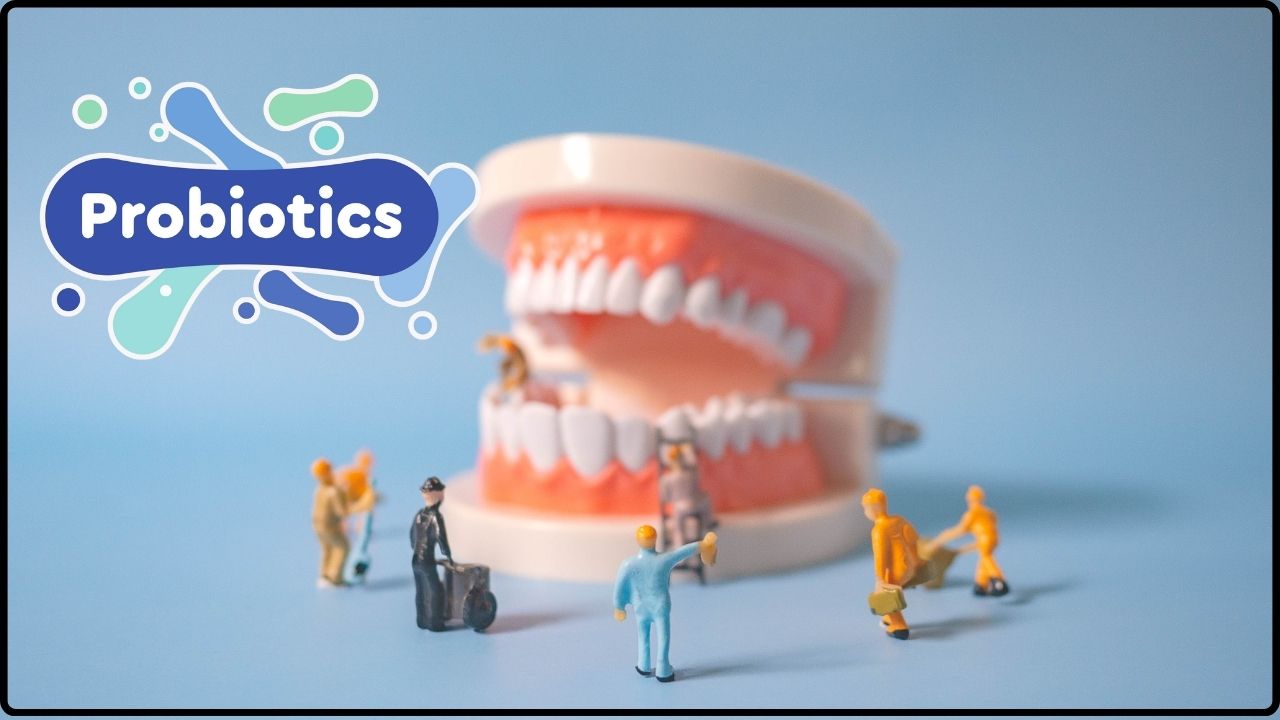
The mouth’s bacterial community works like a neighborhood — when good bacteria dominate, everything stays peaceful. When bad bacteria move in, they start trouble, causing inflammation and decay.
Probiotics help by:
- Competing for space and nutrients with harmful bacteria.
- Producing substances that stop harmful microbes from growing.
- Making it harder for pathogens to stick to teeth and gums.
- Creating a balanced pH environment that discourages acid-producing bacteria.
A healthy oral microbiome not only prevents dental problems but can also reduce systemic inflammation linked to conditions like diabetes and cardiovascular disease.
2. Preventing Cavities and Tooth Decay
Cavities, or dental caries, happen when bacteria like Streptococcus mutans produce acids that erode enamel. Probiotics can reduce these bacteria and lower the risk of decay.
A 2024 study in Frontiers in Microbiology found that participants who used probiotic lozenges for eight weeks had significantly lower counts of cavity-causing bacteria compared to a control group. These beneficial microbes form a natural protective layer, preventing the bad bacteria from colonizing tooth surfaces.
For best results, experts suggest probiotics containing Lactobacillus reuteri or Bifidobacterium animalis, which have shown measurable effects in clinical trials.
3. Improving Gum Health and Reducing Inflammation
According to the CDC, over 42% of American adults over 30 have some form of gum disease — that’s nearly half the population. The symptoms often start small: bleeding gums, bad breath, and sensitivity. But if left unchecked, it can lead to bone loss and tooth loss.
Probiotics help by lowering harmful bacteria that cause inflammation. Studies published in the Journal of Periodontal Research have shown that using probiotic mouth rinses or tablets can reduce gum bleeding, lower plaque scores, and even enhance recovery following deep cleaning treatments.
For patients who are prone to periodontitis, probiotics act as a safe and supportive companion to professional care.
4. Fighting Bad Breath (Halitosis)
Bad breath doesn’t always come from food — it’s often caused by bacteria on the tongue that produce sulfur compounds.
Probiotic strains such as Lactobacillus salivarius and Streptococcus salivarius K12 have been shown to decrease these odor-causing compounds.
Regular use of oral probiotics, especially in lozenge form, can reduce bad breath and make your mouth feel fresher longer.
The Connection Between Probiotics and Immunity
Here’s where it gets even more interesting: oral probiotics don’t just help your mouth — they also support your immune system.
Your oral cavity is one of the first lines of defense against pathogens. Every time you eat, drink, or breathe, bacteria enter your mouth. Probiotics can strengthen that frontline defense by:
- Stimulating the production of immune molecules such as cytokines.
- Enhancing the activity of immune cells like macrophages and lymphocytes.
- Reducing chronic inflammation that weakens immunity.
According to the National Institutes of Health (NIH), a balanced oral microbiome can lower the risk of infections and systemic inflammation. Chronic oral inflammation has been linked to conditions such as heart disease, diabetes, and respiratory infections — meaning your oral health directly affects your overall well-being.

Top Probiotic Strains for Oral Health
| Probiotic Strain | Main Benefit | Common Sources |
|---|---|---|
| Lactobacillus reuteri | Reduces gum inflammation, supports gum healing | Lozenges, tablets |
| Bifidobacterium animalis | Balances oral pH, discourages acid-producing bacteria | Yogurt, supplements |
| Lactobacillus salivarius | Fights bad breath, improves oral hygiene | Oral probiotic tablets |
| Streptococcus salivarius K12/M18 | Boosts oral immunity, reduces sore throat bacteria | Chewables, gums |
| Lactobacillus rhamnosus GG | Decreases plaque buildup, strengthens enamel | Fortified dairy products |
Research from the American Dental Association (ADA) and National Center for Biotechnology Information (NCBI) confirms that these strains are among the most beneficial for maintaining oral health.
Natural Sources of Probiotics
You don’t always need supplements to get your daily dose of good bacteria. Many natural foods are rich in probiotics:
- Yogurt with live cultures – easy and affordable for daily intake.
- Kefir – a fermented milk drink with multiple probiotic strains.
- Sauerkraut and kimchi – packed with beneficial lactic acid bacteria.
- Miso and tempeh – fermented soy products often used in plant-based diets.
- Pickles (naturally fermented) – good bacterial content without the artificial additives.
To keep it effective, choose options labeled “contains live and active cultures.” Avoid sugary varieties since sugar feeds harmful bacteria in the mouth.
Practical Steps to Use Oral Probiotics
- Keep up with daily oral hygiene. Brush twice a day, floss, and rinse your mouth after eating.
- Select proven probiotic strains. Look for products that list strain names, not just “contains probiotics.”
- Be consistent. Most clinical studies show results after 4–8 weeks of regular use.
- Use oral delivery forms. Lozenges, probiotic mouthwashes, or chewables are better for direct contact with the mouth.
- Don’t skip the dentist. Probiotics support oral health but can’t replace professional cleanings or checkups.
- Monitor your progress. Pay attention to signs like reduced gum bleeding, improved breath, and cleaner feeling teeth.

Safety and Limitations
For most people, probiotics are safe. However, some individuals — especially those with compromised immune systems or serious health conditions — should consult a doctor before starting supplements.
It’s also important to note that not all probiotic products are created equal. Some have too few live bacteria to make a difference, while others may include strains not supported by science. Always choose clinically tested and verified products from trusted brands.
Research is still ongoing. While studies show promising results, probiotics are not yet a standard dental treatment. They’re best viewed as an adjunct therapy — something that enhances traditional dental care rather than replaces it.
The Oral-Systemic Link: How Anemia and Iron Deficiency Affect Dental Health
Digital Dentistry: Review of the Best Intraoral Scanners Available in India.
Toothmonk Review: Is it the Best Marketplace for Dental Supplies?
The Future of Probiotics in Dentistry
The field of oral microbiome research is growing fast. Universities such as Harvard, the University of Michigan, and UCLA are studying how probiotics can be integrated into toothpaste, rinses, and chewing gums to reduce the need for antibiotics and chemical-based mouthwashes.
The American Dental Association (ADA) predicts that microbiome management could become a new branch of preventive dentistry, focusing on balancing bacteria instead of eliminating them completely.
This means that in the near future, your dentist might recommend a personalized probiotic plan tailored to your own oral bacteria profile — the same way nutritionists now customize diets based on gut microbiome data.